

Georgia’s State Security Service: use of Camite often results in fatal outcomes - of 54 people taken to clinics after November 28, 2024, 5 showed mild intoxication, discharged the next day
Politics
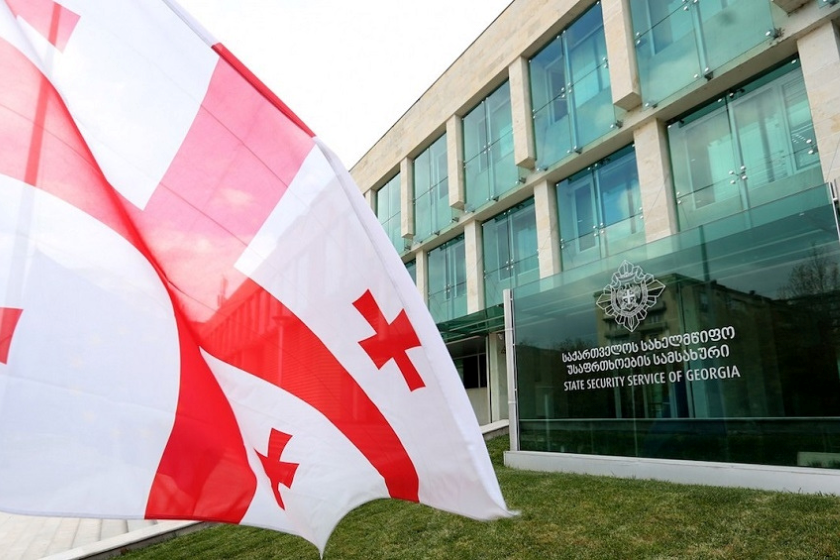
Photo: State Security Service
The Georgian State Security Service on Saturday released updated information on the number of individuals hospitalized in the days following 28 November 2024.
Speaking at a briefing today, Lasha Maghradze, the First Deputy Head of the SSSG,stated that out of 54 people transported to medical facilities, only five showed signs of mild intoxication and were discharged the following day.
Maghradze emphasised that the substance bromobenzyl cyanide, commonly known as Camite, can cause extremely severe and often fatal effects when used against humans.
“As part of the investigation, representatives of the medical and forensic fields were interviewed as witnesses. Additionally, based on publicly available materials, we would like to clarify for the public that the use of bromobenzyl cyanide, or Camite, against people leads to extremely severe and, in many cases, lethal outcomes. For this reason, it was banned in the civilized world in the 1930s”, Maghradze said.
He highlighted the contrast between the substance’s known dangers and the official medical data from Georgia’s Ministry of Health.
“According to documents obtained from the Ministry, of the 54 individuals transported to hospitals by emergency medical crews in the days after November 28, 2024, only five exhibited mild intoxication and were released from medical facilities the following day”, he continued.
Maghradze also noted that the investigation determined the substances used for crowd control during the night of December 4-5, 2024.
According to the findings, law enforcement deployed chlorobenzylidene malononitrile (CS gas), dissolved in a propylene glycol solution - none of which fall under the category of prohibited substances.
“Chemical examinations confirmed that the materials seized from the Special Tasks Department of the Ministry of Internal Affairs consist of: first, the chemical substance chlorobenzylidene malononitrile; second, the chemical trichloroethylene (in this case, referring to a written-off residue amounting to 880 liters); and third, propylene glycol”, he concluded.


