

Parliamentary inquiry: former military official claims delay led to “huge tragedy” in 2008 war
Justice
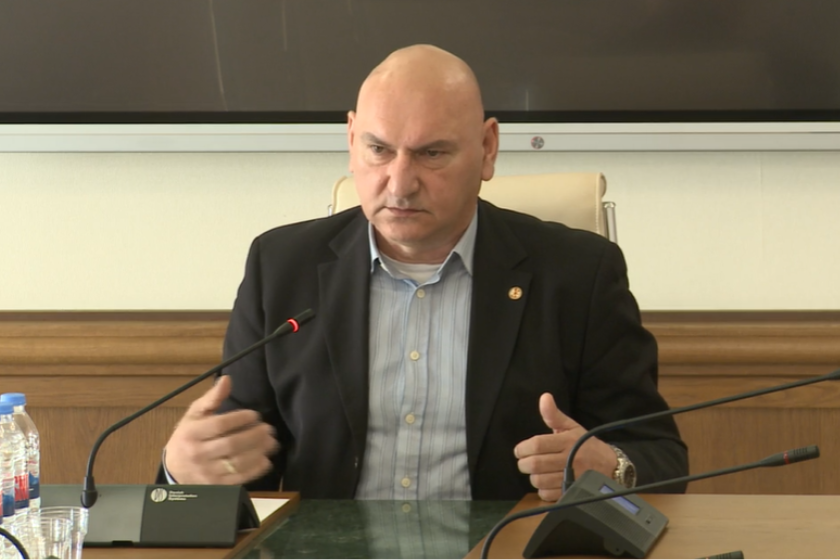
Lasha Koiava
Photo: Screenshot from Video
Georgian Parliament’s Temporary Investigative Commission examining alleged crimes committed by the former United National Movement Government between 2003 and 2012 on Thursday reviewed the situation in Georgia's Russian-occupied territories between 2004 and 2008 and the 2008 August war with Russia.
During a session, Lasha Koiava, the Head of the Medical Department of the Ground Forces under the former UNM Government, said that a significant delay in the deployment of Georgian troops at the start of the August 2008 war resulted in a huge tragedy.
Koiava further noted that all units were supposed to begin their movements at 7 am on August 8, but the operation had not begun even by midday.
“The delay, of course, caused a huge tragedy. By 7 am on [August 8], the movement of all units should have already begun. It was past noon, and combat operations had not yet started”, Koiava told the Commission.
He further claimed that journalists arrived and “allowed” them to begin combat operations.
Koiava emphasised that the military had warned of potential failures, and events unfolded as anticipated, preventing the liberation of Tskhinvali.
He accused the then-Defense Minister David Kezerashvili of issuing an “absurd order” that ultimately contributed to the operation’s collapse.
“Kezerashvili gave the order for the 4th Brigade, which was deployed and advancing towards Znauri, to turn 90 degrees and enter Tskhinvali. This was undoubtedly an absurd order or request, because a brigade deploys according to combat regulations. For it to turn 90 degrees, it would take possibly an hour or even two, considering the terrain. It would have taken a significant amount of time - time that would have been crucial, allowing the enemy to move from Znauri and flank the 4th Brigade”, Koiava said.
He also emphasised that military personnel attempted to prevent Kezerashvili's order from reaching the commander of the 4th Brigade. However, the then-Defense Minister contacted the commander directly, forcing him to begin the brigade's turn, which Koiava believes led to a complete fiasco.


