

Central Election Commission of Georgia addresses Parliamentary Assembly of Council of Europe with open letter
Elections
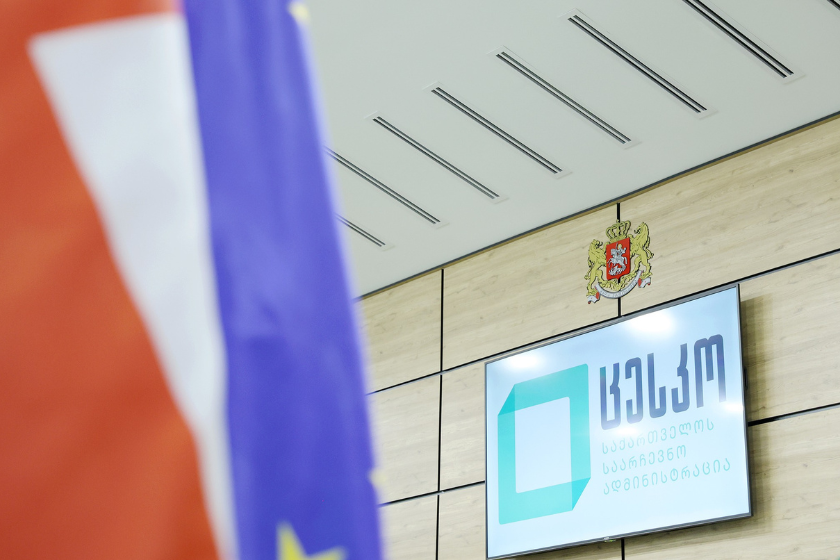
Photo: Central Election Commission
The Central Election Commission of Georgia on Tuesday addressed the Parliamentary Assembly of the Council of Europe, urging a factual and unbiased understanding of the 2024 parliamentary elections.
Five months after Georgia's parliamentary elections, the Central Election Commission issued an open letter to the Parliamentary Assembly of the Council of Europe, defending its conduct and clarifying misinformation.
“We decided to write this letter five months after the October 26 parliamentary elections, as the campaign to discredit the elections and the Georgian Election Administration has not ceased. The final straw in this regard was the raising of concerns over the decree in its resolution by the Parliamentary Assembly of the Council of Europe which is purely technical in nature. Through this decision, the Election Administration merely clarified a legal provision that has existed in the Election Code for years. We have reviewed your position regarding the decree and would like to note that, given our public statements and repeated explanations on this matter, we expected that, prior to deciding on issues concerning our activities, you would have shown interest in our position. However, the information presented in the document does not reflect reality”, the statement said.
The Central Election Commission emphasised that observers’ rights, enshrined in Article 41 of the Election Code, remain intact and unaffected by this clarification.
The decree responded to previous violations by certain stakeholders, who had improperly captured photos and videos inside polling stations, compromising privacy.
“Following this, in 2018, legislative amendments were adopted prohibiting the photographing, videotaping, or other processing of information or data that is not considered public2 on election day. The OSCE/ODIHR also took note of this change in its 20183 report. Accordingly, the prohibition on the improper processing of personal data has long been known to all electoral stakeholders, as evidenced by the existence of two versions of the voter list, as prescribed by law: One is the public version of the list, which is provided to all interested authorised parties. The second is intended for the Election Commission and includes the lists uploaded into the verification machines, containing all voters’ personal data. This version does not constitute public information and, accordingly, its copying or any other form of processing was already prohibited by law”, the statement noted.
“The rights of observers are clearly defined in Article 41 of the Election Code of Georgia, and none of these rights have been, nor could be, restricted by the CEC decree. With the above-mentioned decree, the CEC merely clarified the voting procedures to ensure the protection of voters' personal data. This clarification was necessary due to numerous incidents recorded during previous elections, where some stakeholders violated the law by improperly observing election procedures, taking photos and videos, and failing to safeguard voters' personal information”, the CEC said.
The CEC highlighted that Georgia's electoral procedures meet or exceed those of several other democracies and points to international audits and the implementation of electronic voting with a paper trail as evidence of robust electoral reform.
“Considering all of the above, it should be clear why the court case on this issue was decided in favour of the Election Administration at all levels. The complaining political entity and the local observer organisation have not - and could not - present a single valid argument to support their position, as no such arguments exist. Accordingly, it was evident from the outset that the purpose of their lawsuit was not to promote the fairness of the election process, but rather to discredit the Georgian Election Administration and the electoral process as a whole, both domestically and internationally. Unfortunately, they have partially achieved their goal, as the dissemination and endorsement of their so-called arguments - without proper verification - have become part of the agenda for some international partners and politicians”, the statement noted.
The Commission accused some political actors and observer organisations of distorting reality for political gain, ultimately undermining public trust in democratic institutions.
“We kindly urge you to verify any information received from interested parties with the relevant authority - in this case, the Election Administration of Georgia - and to seek accurate details directly from the primary source. We respectfully ask that the process not be viewed superficially, as your public statements and assessments can significantly influence the already polarised environment in Georgia. For our part, we express our full readiness - within the scope of our competence - to consider and, where possible, take into account all recommendations aimed at improving the electoral process. We are firmly convinced that now is the appropriate time to initiate this dialogue and engage in a constructive discussion amongst all parties in a calm and respectful environment, rather than further escalating tensions”, the Election Administration concluded.


